

As the workspace sector evolves in the UK, the range of product offerings and amenities has evolved along with the ways workspace agreements are handled.
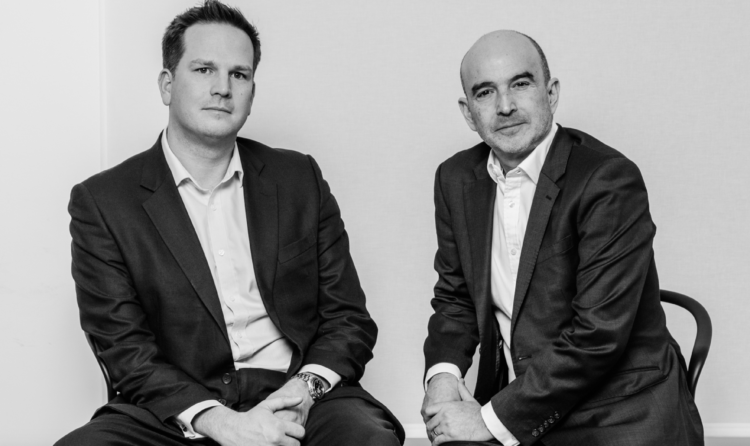
In advance of GCUC Manchester, we connected with Douglas Green and Will Kinnear from GKRE to get their insights into regional coworking trends, the impact smaller markets have on the sector and why a more balanced approach to joint management agreements makes sense.
GCUC UK: GCUC Manchester is focused on flexible workspace in regional cities. From your perspectives as industry specialists at GKRE, what do you see happening with the workspace sector in small- and mid-size cities and regions?
Historically, the flexible workspace market in regional cities and towns has been limited by a lack of stock and understanding of how flexible workspace can work alongside, and sometimes enhance, a real estate offering, which meant that regional towns and cities weren’t realising the benefits of flexible workspace.
However, this is clearly changing and we are seeing greater demand from operators, owners and tenants for purpose built and designed workspaces. This is being driven, at least partly, by tenants, who over the last 18-24 months, have become more aware of the sector and the workspace benefits it can provide to them and so are increasingly demanding a flexible workspace product near to where they live.
Alongside this, there is an obvious rise in the quality of product and range of facilities available, with more emphasis on community space, which is all forming part of a new generation of workspace in regional areas. There has always been an argument for closer ties between work and residential spaces to reduce commuting times and improve work/ life balance and the maturing of the flexible workspace market in regional cities and towns helps to address this.
Our views and insight are informed by the reports we regularly publish, focussed on regional cities across the UK. We have been impressed with the new and varied range of operators opening and challenging the established models, with regional cities offering a blend of flexible workspace product from more established operators to emerging providers.
Our reports have so far covered Glasgow, Bristol, Leeds, Birmingham, Nottingham and, of course, Manchester, which we are updating for the GCUC event. Birmingham especially has seen dramatic growth and activity over this period, with the Midland’s economy growing by £32.9bn between 2010 and 2018 and flexible workspace dominating office space transactions completed over Q2 of 2018, as we produced our report. Each report demonstrates how there are parallels between general economic activity and growth in the flexible workspace sector and that this growth is driving occupancy and office take up.
What impact does regional coworking have on the larger flexible workspace sector? Are these smaller markets driving sector-wide changes?
These smaller markets are not necessarily driving sector wide changes at the moment but they do bring challenges that aren’t necessarily as apparent in cities with larger, more established office markets. Tenants who have seen the standard of flexible workspace product that is available in larger cities are increasingly looking for a similar product closer to home, and are demanding that owners and operators provide them with the same levels of service, product and hospitality as they are seeing elsewhere in the UK.
Inevitably, this will lead to more niche flexible workspace products being provided, tailored to what is relevant to and in demand for each particular locality, although the availability of stock will continue to be an influencing factor.
The growth of flexible workspace in different towns and cities won’t be a case of one size fits all and therefore there may be various different models across local markets, which do then emerge to drive sector wide changes.
Your discussion with Jonathan Weinbrenn at GCUC Manchester will cover how different workspace models have emerged over time. What are some of the biggest changes you’ve seen around flexible workspace? And where are we going from here?
By far, the biggest change we have seen in the flexible workspace sector in the last few years is the approach and attitude that property owners have towards joint venture management agreements. Historically, property owners would turn to such agreements when they had a challenging asset, in need of significant capital and repositioning and which were difficult to market.
Now, both operators and property owners have a much more balanced approach to management agreements. Property owners are increasingly seeing them as not just a mitigation strategy but rather as part of a proactive strategy to drive uptake and the profitability of buildings as they increasingly recognise the value of space as a service and get involved in the market.
Property owners now look at such agreements on a specific property as a calculated risk that is shared with operators. They understand how they can benefit from an operator’s expertise and marketing capabilities, and are entering into partnership arrangements with operators in order to provide a blended offering of both serviced and managed space in their building. There is an increasing awareness of how having a flexible workspace offering within a portfolio can add value and amenity to other tenants or even to mixed-use developments. Operators see management agreements as an opportunity to leverage their brand and know how in return for fees, profit share and market growth.
The flexible workspace product is also evolving, which is creating a more segmented and diverse market offering. Niche products are increasing their market share, both in terms of smaller operators creating products tailored to the needs and demands of particular localities, but also as more and more operators seek to differentiate themselves by cultivating a sense of belonging among tenants. Operators such as TechSpace or Tech Hub are obvious examples, catering to tech scale ups, or One Girl Band, which provides space to woman-led businesses.
Going forward, we expect niche to continue to grow, but we are also seeing an interesting trend in flexible workspace becoming an obvious option for repurposing space, particularly unused retail space. In 2017, John Lewis considered converting surplus space at their Oxford Street store into flexible workspace, and more recently Leicester City Council are working with the owners of the Leicester Fenwick building with the intention of including a flexible workspace offering. The Marland’s Shopping Centre in Southampton has also been redesigned to include flexible workspace.
Now in its third year, GCUC UK gives space operators a way to connect, share best practices and deepen their understanding of trends and the future of the flexible workspace sector. What is most exciting to you about GCUC UK, in general, and GCUC Manchester, in particular? What do you hope comes from the event?
There is a danger that thinking about flexible workspace can become too London-centric, with media outlets focussing on big deals occurring between property owners and operators in the Capital. However, GCUC UK and GCUC Manchester especially, actively encourage broader discussion about the sector and consideration of how trends and innovation emerging in regional areas can drive growth.
GCUC brings forward thinkers together, encouraging collaborative discussion that takes the sector forward with a better understanding of the current state of play and the likely impact of current trends and developments on the sector’s growth.
Space as a service is incredibly diverse, and different people will naturally gravitate to different flexible workspace offerings best suited to their own preferences and localities. No one product is the definitive flexible workspace, and so bringing people together who all share an interest in flexible workspace will inevitably move thinking forwards for the benefit of the sector as a whole.
Book your ticket for GCUC Manchester today.
[ssba-buttons]