Africa’s coworking and flexible workspace industry is not waiting for the future to arrive.
It is already building it.
From Cape Town to Nairobi, Lagos to Lusaka, operators, developers, investors, community builders, technology leaders, and entrepreneurs are rethinking what work can look like across the continent. And at GCUC Africa, those people are coming together in one room.
Taking place September 16–17 in Cape Town, GCUC Africa is bringing together the people shaping coworking and flexible work across the continent. The programme is built around practical insight, honest conversation, and peer learning rooted in the realities of African markets.
And the speaker lineup reflects that.
This isn’t a conference about importing someone else’s playbook. It is a chance to hear directly from the people building, operating, investing in, and thinking about the future of work in Africa right now.
Here are some of the voices we’re most excited to hear from.
If you want to understand where coworking in Africa is headed, start with the people who are already building it.
Paul Keursten, Co-founder and CEO of Workshop17, will join GCUC Executive Producer Liz Elam for a conversation about the African flex and coworking landscape. Workshop17 has become one of the continent’s most recognizable flexible workspace brands, making Paul’s perspective particularly relevant to the conversation around how the industry can grow while maintaining the culture and community that make coworking different.
GCUC recently sat down with Paul to explore how Workshop17 has approached scaling without losing its culture, making his appearance at GCUC Africa a natural continuation of a much bigger conversation about growth in the African market.
Joining him on the panel will be Adé Carniel-Perrin, COO of AfricaWorks; Carolyn Elliman, Country Manager at IWG; and Lukonga Lindunda, Co-Founder of BongoHive. Together, they bring perspectives from different corners of the African workspace and innovation ecosystem.
That mix is important.
There isn’t one model for coworking in Africa. There isn’t one market, one customer, or one path to growth.
And that’s exactly why these conversations matter.
Coworking doesn’t exist in isolation.
It sits inside cities, commercial real estate markets, economic development strategies, and increasingly, conversations about how people live and work.
That’s why Alderman James Vos, Mayoral Committee Member for Economic Growth for the City of Cape Town, will open the programme with a look at economic growth, public-private partnerships, and the role coworking can play in creating enabling environments.
It’s a perspective that pushes the conversation beyond the four walls of a workspace.
What role can flexible workspace play in growing local economies?
How can cities, landlords, developers, and operators work together?
And what happens when coworking becomes part of a city’s broader economic infrastructure?
Those are questions that will become increasingly important as African cities continue to evolve.
One of the most exciting things about GCUC Africa is that the conversation isn’t limited to Cape Town.
Martin Uche, CEO of Fortren & Company, will bring a Nigerian perspective to the programme with a case study on the future of work in Africa, focusing specifically on Nigeria.
That matters because Africa is not a single market.
The opportunities, challenges, infrastructure, demographics, and working cultures can vary dramatically from one country to another. What works in Cape Town may not work in Lagos. What works in Nairobi may look completely different in Lusaka.
The future of work in Africa will be shaped by those differences, not despite them.
And GCUC Africa is creating space for those differences to be part of the conversation.
Coworking has never really been just about desks.
And the next era of the industry may stretch that definition even further.
A panel featuring Murray Clark, Co-founder and CEO of Neighbourgood, and Nyambura Gichohi, Co-founder and CEO of Ikigai Nairobi, will explore the next era of coworking through hospitality, co-living, clubs, and wellness spaces.
Both bring perspectives that challenge the traditional idea of what a workspace needs to be.
Nyambura’s approach at Ikigai is particularly interesting. The Nairobi-based brand has built its spaces around nature, wellness, and the experience of the people using them. In a recent GCUC Podcast conversation, Liz and Nyambura explored Ikigai’s growth, its decision to slow down, and what intentional growth can look like for an African coworking business.
Because perhaps the question isn’t simply:
Maybe it’s:
That shift from square footage to experience is already happening.
Of course, the future of work can’t be discussed without talking about technology.
At GCUC Africa, Manuel Conti, CEO of PONT, and Wynand Theron, Founder of iTried, will tackle technology as a business enabler, including infrastructure, software, and the future of AI.
But then the conversation takes a more interesting turn.
Immediately afterward, Josephine Eyre, Digital Anthropologist, will ask a question that may be one of the most important questions facing the industry:
AI gets smarter. What becomes more valuable about being human?
For an industry built around community, connection, and physical spaces, that’s a question worth sitting with.
Technology can automate processes.
AI can make businesses more efficient.
Software can help operators understand their businesses better.
But community, belonging, trust, and human connection aren’t easily automated.
And perhaps those are exactly the things that become more valuable as technology becomes more powerful.
The future of coworking also has to consider who gets included in it and how those spaces are built.
Saskia Lorrison, Director of Special Projects at KOFISI Africa, will lead a session on inclusive spaces, while the afternoon breakout sessions will dive into community-first approaches, building teams that thrive, sustainable coworking spaces, systems and software, storytelling, and designing for the future of work.
These aren’t abstract ideas.
They’re the everyday decisions operators are making about their businesses, their teams, their members, and their communities.
And they’re exactly the kinds of conversations that become more valuable when people can share what is actually working.
Of course, the speaker lineup is only part of the story.
GCUC Africa’s Who’s Coming list includes operators, founders, developers, workspace leaders, real estate professionals, technology companies, communications experts, and community builders from across the continent.
That’s intentional.
GCUC has always been about more than sitting in an audience and listening to someone talk.
It’s about the conversation that happens after the session.
The introduction over coffee.
The operator who tells you how they solved the problem you’ve been struggling with for six months.
The idea you didn’t expect to hear.
The person you meet who ends up becoming a business partner, mentor, customer, or friend.
That spirit is at the heart of GCUC Africa.
As Antonette Benting, GCUC Africa’s Event Producer, and Liz Elam have emphasized, this event isn’t about copying and pasting a conference model into Africa. It’s about building from within and creating a platform for the people already shaping the continent’s future of work.
There is no single definition of coworking in Africa.
And that’s the point.
It’s being shaped by different cities, different economies, different communities, different challenges, and different opportunities.
At GCUC Africa, those perspectives will come together in Cape Town for two days of learning, connection, and some big questions about where the industry goes next.
Because the future of work in Africa isn’t something to predict from a distance.
It’s something being built right now by the people in the room.
Join us in Cape Town September 16–17 and be part of the conversation.
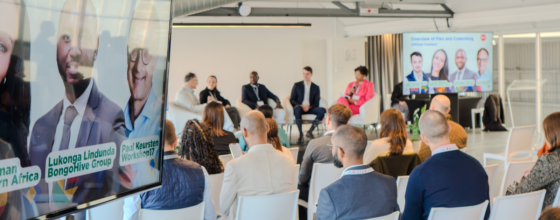
GCUC Africa brought the global coworking community to Cape Town for the first time, connecting operators, sharing ideas, and exploring Africa’s role in the future of work.
Read More
What does the future of coworking in Africa look like? Ikigai’s Nyambura Gichohi joins Liz Elam to discuss nature-based wellness, intentional growth, flexible workspace for NGOs, and the opportunities ahead for African coworking operators.
Read More
Workshop17 co-founder Paul Keursten shares how coworking communities in Africa are growing through culture, hospitality, and human connection. Listen to him share what global operators can learn from their journey on the GCUC Podcast.
Read More
Cape Town is about to become the center of the global flexible workspace movement. Discover why GCUC Africa 2026 is bringing international coworking leaders, innovators, and entrepreneurs together to shape the future of work across Africa.
Read More
The future of flex offices is no longer defined by leases alone. Leaders across commercial real estate are embracing customer experience, enterprise flexibility, hospitality, and operational excellence to create workplaces that people genuinely want to use.
Read More
GCUC 2027 is coming to Miami Ironside. Discover why Miami’s booming coworking industry, creative culture, and global business community make it the perfect host city.
Read More
Jessica Knapp’s coworking journey spans community operations, coworking technology, and industry leadership. In this conversation with Liz Elam, she shares lessons on building a thriving coworking community, leveraging technology, understanding business fundamentals, and why operators should never feel like they’re building alone.
Read More
Flexible office space in London is thriving. Here are five reasons why tech growth, transport, coworking demand, and European flex trends are driving the market.
Read More
Jean-Yves Huwart joins the GCUC Podcast to discuss the European coworking market, Coworking Europe in Paris, managed office, flexible brokers, AI, and profitability.
Read More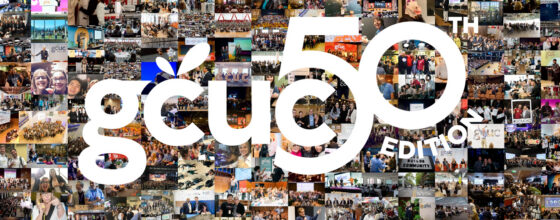
50 Events. One Movement. A Look Back at GCUC Through the Years Fifty events in, and it still feels like we’re just getting started….
Read More


