

What if you ran your building like a hotel instead of an office?
It’s a question Elliott Sparsis has been thinking about for years.
Elliott spent nearly a decade at Blackstone before moving into the meetings and events world, helping bring Convene to London and later serving as CEO of Cavendish Venues. Now, he and co-founder Declan Cassidy are building something of their own: Together, a hospitality-driven meetings and events business based at 88 Wood Street in London.
In a recent episode of the GCUC Podcast, Liz Elam sat down with Elliott to talk about his journey from real estate and finance into hospitality, why Together is betting big on physical experiences, what companies want from meetings now, and what coworking operators can learn from the business.
And there’s no shortage of things to talk about.
Elliott’s path into meetings and events wasn’t exactly conventional. He spent almost ten years at Blackstone, working in real estate and finance, before a conversation with Ryan Simonetti, the co-founder of Convene, opened the door to something different.
When Elliott visited Convene in New York, he immediately saw a product that was missing from the London market. The experience was elevated, design-forward, and very different from the traditional meeting spaces that dominated the market.
What followed was a move to Convene, where Elliott helped bring the brand to the UK and build out its London footprint. From there, he went on to Cavendish Venues and eventually launched Together.
Looking back, the through line is actually pretty simple. Elliott says he has two major passions outside of family: real estate and hospitality.
Together is the combination of both.
“We’ve always hosted at home, we’ve always had dinner parties, we’ve always had friends over. And hospitality is a massive part of what I love.” That combination is at the heart of how Elliott thinks about the future of meetings and events.
The original thesis behind Convene was famously framed as, “What if you ran an office building like a hotel?” Elliott believes that idea has evolved.
Today, he sees Together as a hospitality product that lives within a building and helps landlords deliver an experience they may not be equipped to operate themselves. Landlords know real estate. They know how to build and manage buildings, but they aren’t necessarily hospitality operators. They may not have the teams, systems, or operational expertise required to create a high-touch experience for thousands of people moving through a space.
That’s where Together comes in.
“We’re a hospitality business,” Elliott explains.
And that hospitality model extends well beyond meeting rooms. At 88 Wood Street, Together is operating meeting and event spaces while also providing catering and food and beverage services to building occupiers. The company is also operating Club 88, a private club and event space with a roof terrace overlooking the City of London.
It’s a much broader business than simply renting out rooms by the hour.
One of the most interesting parts of the conversation is how candid Elliott is about what it actually takes to build a hospitality business. The physical space matters, but the team matters even more.
Together has invested heavily in its people, with chefs, front-of-house hospitality staff, AV engineers, and other specialists working behind the scenes to deliver the experience. Elliott makes a strong comparison to flexible workspace. Meeting and events aren’t simply about the physical product.
“You can’t deliver hospitality without a team that is bonded, joined up, friends, prepared to go to the trenches for each other.”
That is particularly relevant for coworking operators who are considering expanding their event offerings.
Liz asks Elliott what he would tell a coworking space that sees empty space and thinks it might be an opportunity to move into meetings and events.
His answer?
Get the real estate right, but don’t overlook the team.
The meetings and events business operates differently from traditional coworking. The sales language, operating model, customer expectations, and service delivery are all different. If operators want to enter the space, Elliott argues that they need people who understand the product deeply.
Liz agrees, pointing out that the people delivering the experience are often what customers remember most. It’s a familiar lesson for anyone in hospitality: the experience lives in the people.
Elliott and his investors are making a particularly interesting bet about the future.
After spending 18 months raising capital, Together closed a £10 million funding round. Elliott says the process involved 63 different pitch decks and conversations with family offices, private equity firms, venture capital, and hedge funds. But finding the money wasn’t necessarily the hardest part. Finding the right investor was.
The central thesis that ultimately resonated was surprisingly simple. As the world becomes increasingly digital and AI-generated, and artificial content becomes more prevalent, physical experiences may become more valuable, not less.
“You just can’t fake being in a room with people.”
That idea becomes a major thread throughout the conversation. Liz has been talking about the importance of face-to-face connection for years, and the two agree that technology isn’t going to eliminate the value of being physically together. If anything, it may increase it.
As more work becomes digital, people may place an even greater premium on experiences that provide genuine human connection. A great event can leave people feeling energized, elevated, and connected in a way that a video call simply can’t replicate.
Another major shift Elliott is seeing comes directly out of the pandemic. COVID forced companies to take a much harder look at the space they owned and how often they actually used it. Large corporate meeting rooms and auditoriums can be incredibly expensive to operate.
Elliott believes that this has created a significant opportunity for specialist meeting and event businesses. Instead of maintaining an expensive auditorium inside their own office, companies can outsource that experience to specialists.
The result is a shift away from the traditional hotel ballroom and corporate meeting room toward spaces that feel more distinctive, experiential, and purpose-built. That is exactly the market Together is targeting.
The conversation takes an unexpected but fascinating turn when Liz asks about food. For Together, catering isn’t simply about making food look good or taste good. It’s about how people feel after they eat it.
Elliott talks about the influence of chef Yotam Ottolenghi and the idea of “brain food.” Food that is designed not just to be enjoyable, but to help people stay energized and focused throughout the day. The goal is to avoid the afternoon slump that can follow a heavy meal and instead give delegates food that supports the rest of their experience.
It’s another example of the way Together approaches hospitality.
Every detail is part of the product.
The food.
The technology.
The air quality.
The architecture.
The people.
Even the way a room makes you feel in the afternoon.
That same philosophy extends into the physical infrastructure of Together’s flagship space. Located inside 88 Wood Street, a Richard Rogers-designed building in the City of London, Together has invested heavily in creating an environment that feels different from a traditional meeting venue. 88 Wood Street is recognized by the City of London as a significant example of modern architecture and won a RIBA award in 2000.
One of the investments Elliott discusses is almost invisible to guests: a sophisticated air-handling system designed to respond to carbon dioxide levels and increase oxygen supply when rooms become crowded.
The goal is simple. Don’t let hundreds of people sitting in a room feel tired and sluggish.
Another investment is impossible to miss: a massive nine-meter-by-three-meter LED wall in the main event space. For Elliott, technology isn’t there simply because it looks impressive. It’s another tool that can fundamentally change the experience of an event.
Liz is already thinking about how GCUC London can use it, from branding and visuals to calming nature scenes during breaks.
For coworking operators, the conversation raises an interesting opportunity. Many flexible workspaces already host events. But could meeting and event space become a more intentional part of the business model? Elliott’s advice is clear: don’t underestimate how different the business is.
It’s not simply about having an empty room and putting some chairs in it.
You need the right space.
You need the right technology.
You need the right operational infrastructure.
And most importantly, you need an experienced team that knows how to sell and deliver the experience.
As Liz points out, there is a major difference between renting someone a room and actually helping them produce a successful event. The latter is what creates loyalty.
The customer isn’t left alone to figure everything out. There is a team there to anticipate problems, respond quickly, and make the experience feel effortless. That’s hospitality in action.
The conversation also touches on something particularly important to Liz: mental health.
Together supports James’s Place, a UK charity focused on suicide prevention. The company donates £1 for every delegate who comes through its doors, connecting the growth of the business with a commitment to giving back.
For Elliott, it’s about recognizing that businesses have a responsibility beyond simply generating revenue. The location of Together’s flagship space makes the connection particularly meaningful, with a James’s Place facility located just a short distance away. It’s a small action relative to the scale of the business, but one that is intentionally built into the company’s model.
And for Liz, that’s exactly the kind of thinking she hopes to see more businesses embrace.
The conversation closes with the obvious question: where does Together go from here?
Elliott and the team are already expanding within 88 Wood Street, including the development of Club 88 on the building’s top floor. But the bigger question is whether Together will remain London-focused or eventually expand into other markets.
Elliott says they’re not getting carried away, but they’ve already been surprised by the number of approaches they’ve received from landlords around the world.
The demand, he believes, is there. And he’s seeing an especially interesting shift away from traditional hotel meeting spaces.
Companies increasingly want somewhere that feels different.
Somewhere with natural light.
Somewhere with great architecture.
Somewhere that doesn’t feel like a generic ballroom.
Somewhere that makes people feel like they’re somewhere special.
That may be one of the biggest opportunities in the future of meetings and events.
On October 8–9, GCUC UK will bring operators, landlords, investors, suppliers, and the people shaping the future of flexible workspace together in London. Day one will take place at Together at 88 Wood Street, followed by coworking tours across the city on day two.
Which means you’ll get to experience many of the things Elliott and Liz talk about in this episode for yourself.
GET YOUR TICKETS TO GCUC LONDON →
If you work in coworking, flexible workspace, commercial real estate, or the businesses supporting the industry, this is a conversation you won’t want to miss.
Want to hear Liz and Elliott talk about Together, hospitality, physical experiences, fundraising, food, technology, and the future of meetings?
Listen to the full GCUC Podcast episode with Elliott Sparsis.
Connect with Elliott Sparsis
https://www.linkedin.com/in/elliott-sparsis/
Learn more about Together
https://together.space/
Connect with Liz Elam
https://www.linkedin.com/in/lizelam
GCUC Events
https://gcuc.co/coworking-events/
Watch the GCUC Podcast on YouTube
https://www.youtube.com/@GCUCPodcast/videos

As companies demand more flexibility, traditional office real estate must rethink how it operates. Tuomas Sahi, CEO of Antiloop, shares how combining fixed leases with flexible workspace can create value for property owners while better serving the people who use their buildings. Discover why the future of office real estate is about more than owning space. It’s about understanding work.
Read More
Roger Bruce, CEO of Workspace Geek, joins Liz Elam to explore the future of coworking, from AI and actionable data to smarter operations and the continued importance of human connection.
Read More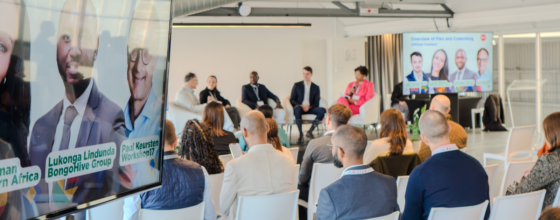
GCUC Africa brought the global coworking community to Cape Town for the first time, connecting operators, sharing ideas, and exploring Africa’s role in the future of work.
Read More
GCUC Access is turning a challenge to the coworking industry into action. Learn how Danielle Casey and 1909 are making mental health support part of founder support.
Read More
The Coworking Institute is a new professional body built to give the coworking industry a permanent home for education, shared knowledge, professional development, and community. Created in partnership with GCUC and Jonathan O’Byrne, the Institute brings operator-led education, the Coworking MBA, AI programs, Foundations, the Coworking Wiki, and an international community together under one roof.
Read More
What does the future of coworking in Africa look like? Ikigai’s Nyambura Gichohi joins Liz Elam to discuss nature-based wellness, intentional growth, flexible workspace for NGOs, and the opportunities ahead for African coworking operators.
Read More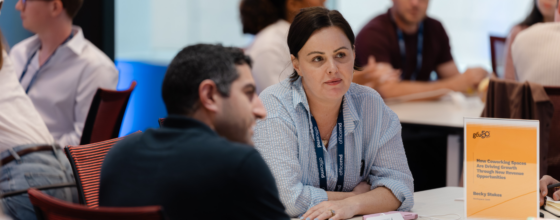
Your coworking technology should make your business easier to run, not create another layer of complexity. Here’s what operators should consider when evaluating their tech stack.
Read More
Workshop17 co-founder Paul Keursten shares how coworking communities in Africa are growing through culture, hospitality, and human connection. Listen to him share what global operators can learn from their journey on the GCUC Podcast.
Read More
The future workplace isn’t defined by square footage or headquarters. It’s built around flexibility, experience, and giving people the freedom to work where they perform best.
Read More
Why do coworking members really leave? It’s rarely about price or amenities. Discover how belonging drives coworking member retention and why GCUC’s Summer Series is helping operators build stronger, longer-lasting communities.
Read More


