
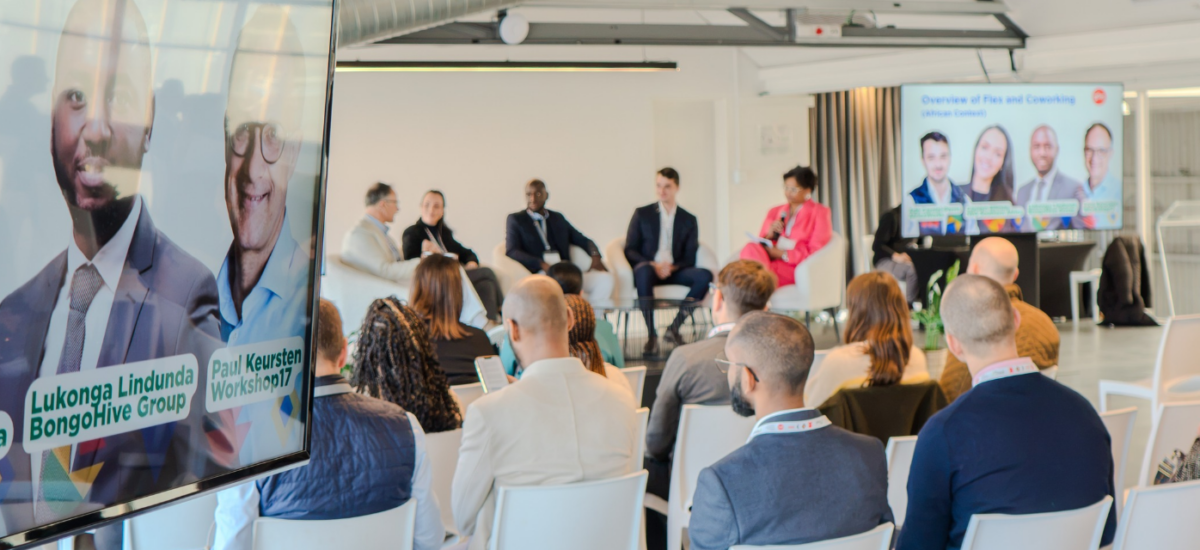
With GCUC Africa, we didn’t just add another destination to the GCUC calendar. We added a continent to the conversation.
Every market has its own way of thinking about space, work, community, hospitality, and growth. The only way to understand those differences is to show up, listen, and make room for people to tell their own stories.
That was the heart of GCUC Africa in Cape Town.
Africa was the one major gap left in GCUC’s global story.
And it is a gap that matters far beyond coworking.
The workforce of the future is increasingly going to come from Africa. The World Bank projects that Africa will account for more than three-quarters of the growth in the world’s working-age population through 2050, adding roughly 625 million people to the global workforce. That makes Africa impossible to overlook when we’re talking about the future of work.
By bringing GCUC to Cape Town, the goal wasn’t to arrive with all the answers. It was to hear directly from the people already building that future. Because the future of work doesn’t look the same everywhere. And it shouldn’t.
One of the biggest takeaways from GCUC Africa was seeing how differently flexible space can take shape in this market.
Co-living, for example, is already deeply connected to the flexible workspace conversation for many African operators. It isn’t simply an additional product layered onto a coworking business. For some, living, working, hospitality, and community are being designed as part of the same experience.
Neighbourgood was a great example of that model, and having their CEO in the room brought a perspective that challenged the way many of us think about the boundaries between work and life.
We also heard from and connected with operators and leaders from across the African flexible workspace ecosystem, including AfricaWorks, Workshop17, IWG, and many others.
These weren’t conversations about what Africa might become. They were conversations with people already building it.
This is why GCUC continues to take the community to new places.
When we stay in the same rooms, we can end up having the same conversations with the same assumptions. When we go somewhere new, we get to listen.
We learn how operators in another market are approaching challenges we recognize, while also discovering challenges and opportunities that may be completely different from our own. That’s what makes the GCUC community global. It’s not that everyone operates the same way. It’s that we have a place to learn from each other.
Cape Town gave us that opportunity in a big way.
For all the conversations about real estate, technology, business models, growth, and the future of work, GCUC has always been about something bigger: people.
We talk a lot about the loneliness epidemic because the spaces we build can play an important role in creating connection and belonging.
That mission doesn’t stop at any border.
If GCUC is going to help build a more connected future of work, then the conversation has to include the people building that future everywhere.
That is why bringing GCUC to new markets matters. We aren’t there simply to share what we’ve learned. We’re there to hear what they’ve learned. To make connections. To exchange ideas. To challenge our assumptions. And to build a community that is genuinely global.
None of this happens without people willing to make it happen.
Antonette Benting had wanted to bring GCUC to Africa for a long time, and she turned that vision into reality through an incredible amount of persistence, hard work, and belief in what this community could become.
For years, Africa was missing from the GCUC map. Now it isn’t.
Huge congratulations to Antonette and everyone who helped bring GCUC Africa to life.
We came home from Cape Town with a longer invite list, a longer list of ideas, and a much clearer sense that GCUC Africa was not the conclusion of a story.
It was the beginning of one.
GCUC has now been to every continent.
And that’s not really the point.
The point is what happens when we keep going.
When we keep showing up in new places. When we listen before we speak. When we make room for new voices. When we connect people who may never have met otherwise.
Africa was never missing from the future of work. It was missing from our stage.
Now we’re listening. And we’re just getting started.
Coworking in Africa is evolving fast. Meet the operators, innovators, and leaders coming together at GCUC Africa to shape what’s next for flexible work.
Read More
What does the future of coworking in Africa look like? Ikigai’s Nyambura Gichohi joins Liz Elam to discuss nature-based wellness, intentional growth, flexible workspace for NGOs, and the opportunities ahead for African coworking operators.
Read More
What happens when you rethink the meeting as an experience? Liz Elam talks with Elliott Sparsis of Together about hospitality, AI, physical connection, and the future of meetings.
Read More
Workshop17 co-founder Paul Keursten shares how coworking communities in Africa are growing through culture, hospitality, and human connection. Listen to him share what global operators can learn from their journey on the GCUC Podcast.
Read More
The future workplace isn’t defined by square footage or headquarters. It’s built around flexibility, experience, and giving people the freedom to work where they perform best.
Read More
The future of flex offices is no longer defined by leases alone. Leaders across commercial real estate are embracing customer experience, enterprise flexibility, hospitality, and operational excellence to create workplaces that people genuinely want to use.
Read More
GCUC 2027 is coming to Miami Ironside. Discover why Miami’s booming coworking industry, creative culture, and global business community make it the perfect host city.
Read More
Jessica Knapp’s coworking journey spans community operations, coworking technology, and industry leadership. In this conversation with Liz Elam, she shares lessons on building a thriving coworking community, leveraging technology, understanding business fundamentals, and why operators should never feel like they’re building alone.
Read More
Jean-Yves Huwart joins the GCUC Podcast to discuss the European coworking market, Coworking Europe in Paris, managed office, flexible brokers, AI, and profitability.
Read More
What can coworking operators learn from hospitality? In this GCUC Podcast recap, Liz Elam and Ben Newton of Patch explore how people-first coworking operations can improve member experience, protect team mental health, and build stronger local communities.
Read More


